UC San Diego
Faculty and Staff
Site Search
Blink Logo
A-Z Sites Department Index
  • Blink Tabs
    • Buy & Pay
    • Facilities & Services
    • Faculty Resources
    • Finance
    • Human Resources
    • Research
    • Safety
    • Student / Class Info
    • Technology
    • Travel
  • Personal Tools
    • At Your Service via AYSO
    • At Your Service via SSO
    • Compensation Calculator
    • Enrollment Central
    • Job Bulletin
    • My Directory
    • My LeaveBalances
    • My Time
    • My Training
    • My Travel
    • SkillSoft eLearning
    • All tools
  • Business Tools
    • APOL
    • Connexxus
    • Marketplace
    • Title & Pay Look-up
    • MyApprovals
    • MyDashboard
    • MyEvents
    • MyFunds
    • MyTravel
    • EmployeeLink
    • FinancialLink
    • TravelLink
    • All tools
  • Instruction Tools
    • ASSIST
    • Class Lists
    • Degree Audit (DARs)
    • Find a Student
    • Majors List
    • Minors List
    • Schedule of Classes
    • Enrollment and Waitlists
    • WebCT
    • All tools
  • Research Tools
    • Proposal Repository
    • Faculty Expertise
    • Forms lister
    • Get Proposal #
    • Shared Facilities
    • FinancialLink
    • TravelLink
    • MyEffort
    • MyFunds
    • My Research Safety
    • MyTravel
    • All tools
  • Blink Home 
  • Safety 
  • Research/ Lab 
  • Hazardous Waste 
  • Photo & X-ray Processor Waste

How to Dispose of Photo and X-ray Processor Waste

Last updated September 8, 2009 3:19:40 PM PDT
Give more feedback

Follow steps to properly dispose of photo and X-ray processing waste, including spent silver-rich fixer, developer solutions, and other processing materials.

Expand all

Dispose of spent silver-rich fixer using 1 of these 3 methods.

  • Method 1: Collect and dispose of silver-rich spent solutions as hazardous chemical waste.
    • Follow the instructions on How to Store and Dispose of Hazardous Chemical Waste.
  • Method 2: Have silver-rich spent solutions hauled off-site for recovery or disposal by an approved outside vendor.
  • Method 3: Silver-rich spent solutions may be treated on-site at UCSD and poured down the drain, either by a service company or by the department. If you choose an on-site method of disposal, you must do the following:
    • Contact the EH&S Environmental Management Facility, (858) 534-2753.
    • Request written acknowledgement of your treatment and disposal method (2 options are decribed below).
    • Keep the acknowledgement near the process location for review by San Diego County wastewater inspectors.
    • Select 1 of the 2 options below for on-site silver recovery and disposal.
      • Option 1: Have a service company perform recovery and drain disposal.
      • Option 2: Perform silver recovery and drain disposal yourself.
    • Make sure these requirements are met, whether using a service company (Option 1) or performing silver recovery yourself (Option 2):
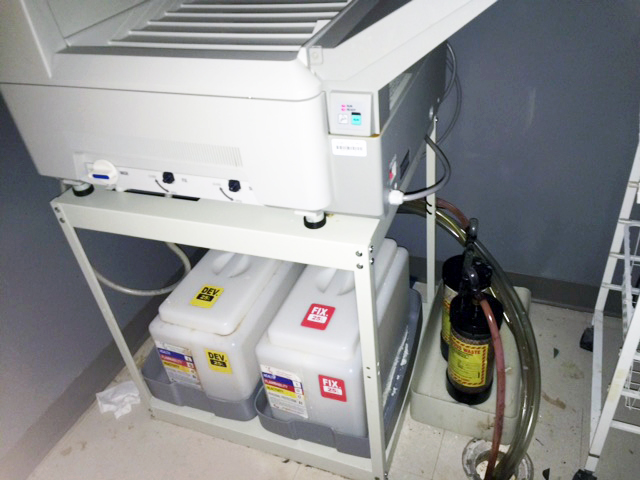
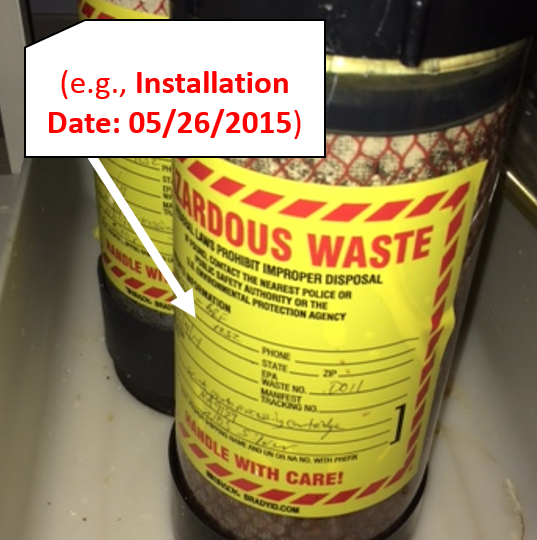
      • Date all chemical recovery cartridges (CRCs) when first placed into service with a permanent marker.
      • Follow the instructions below appropriate to your equipment and the quantity of silver-rich solution generated:
        • If an average of less than 0.5 gallons per day is generated, use a single CRC with manufacturer-specified flow control to treat the silver-rich solution.
        • If an average of 0.5 to 20 gallons per day is generated, use 2 CRCs in series with manufacturer-specified flow control.
        • If an average of more than 20 gallons per day is generated, use 1 of the 2 methods below:
          1. Use an electrolytic unit, plus 2 or more CRCs with manufacturer-specified flow control.
          2. Use an electrolytic unit, plus a precipitation unit.
      • Test effluent using silver test paper at least every 3 months. Contact the EH&S Environmental Management Facility, (858) 534-2753, for more information about test paper.
      • Install fresh cartridge(s) when test paper turns black.
      • Dispose of the solution down the drain when the test paper result is less than 5 ppm.
      • Keep test results with your treatment acknowledgement available for review by county inspectors.
        • If using a service company, have tests performed every 3 months, with results provided to the department.
        • If the department performs testing, keep a log of test results, signed by the person who performs the test.

Dispose of non-hazardous spent developer solutions to the sewer.

Spent developer solutions from most photo processing units can be discharged to the sewer after it's confirmed that they are non-hazardous.

  • Check How to Identify Hazardous Chemical Waste to see if your solution's concentration and quantity is hazardous or non-hazardous.
  • If your solution is non-hazardous, pour it down the drain.
  • If your solution is hazardous, dispose of it as hazardous chemical waste.

Dispose of unused developers, fixers, and other photo processing materials as hazardous chemical waste.

These items are usually hazardous waste.

  • Check How to Identify Hazardous Chemical Waste to determine if your material is hazardous or non-hazardous waste, and follow appropriate disposal instructions.

Expand all

For more information, contact the EH&S Environmental Management Facility, (858) 534-2753.

Notice: Disposal of hazardous waste using sinks, intentional evaporation, or as regular trash is against the law. Campus laboratories must abide by strict state and federal waste disposal requirements. You may be held liable for violations of applicable laws.

Safety

Hazardous Waste

  • Batteries
  • Biohazardous & Medical Waste
  • ChemCycle
  • Chemical Hazardous Waste Tag Diagram
  • Computer Monitor & Electronic Devices
  • Empty Hazardous Materials Containers
  • Photo & X-ray Processor Waste
  • Plastic Tissue-Culture Pipettes
  • Identifying
  • Latex Paint
  • Radioactive Waste Tag Diagram
  • What Can Go Down the Drain?
  • Sharps
  • Extremely Hazardous Chemical Waste Management
  • Hazardous Chemical Waste Management
  • Radioactive Waste Management
  • Using Tags
  • Wash & Rinse Water Disposal
  • Waste Generator Number
  • Waste Collection

Departments


Environment, Health & Safety

See Also


Photographic Processing Hazards

UC San Diego 9500 Gilman Dr. La Jolla, CA 92093 (858) 534-2230
Copyright ©2009 Regents of the University of California. All rights reserved.
  • Terms & Conditions
  • Feedback
  • About Us
  • Accessibility
  • Emergency Info