Empty Research Container Management
Learn how to dispose of empty research containers at UC San Diego.
Disposal of empty research containers is strictly regulated. The instructions below will help you determine how to manage research containers.
For a quick summary, please refer to the Lab Containers Flowchart and Research Waste Disposal Guidelines Poster in order to make the correct determination.
1. Was the material "hazardous" or "extremely hazardous"?
Determine whether the research material the container once held was an extremely hazardous waste:
- Check the list of List of Hazardous and Extremely Hazardous Wastes to determine if the materials are listed as "extremely hazardous waste."
- If the material is NOT listed as extremely hazardous waste, go to Step 2.
- If the material IS listed as extremely hazardous waste, the container must be collected by EH&S and disposed of as hazardous waste.
- Do not rinse.
- Attach a completed hazardous waste tag and request a hazardous waste collection.
2. Confirm the container is really empty.
Containers that held a research material are managed as hazardous waste unless they are empty. In California, empty means drip/dry, a container is only CA empty when all pourable liquids no longer pour when the container is inverted and all non-pourable materials are scraped or otherwise removed.
A container is "empty" when all of the following conditions are met:
- Liquid hazardous material containers:
- No liquid can drain from it when tilted in any direction.
- There is no hazardous material remaining that can feasibly be removed.
- The walls have no encrusted material on them. (A thin layer of dried material is acceptable.)
- Solid or non-pourable hazardous material containers (powders, sludges, grease, and thick resins):
- The interior surface is scraped clean, with no residual material.
- Aerosol containers:
- The contents and pressure are completely dispensed.
- The spray mechanism is in place and functional.
- Gas cylinders:
- Contact EH&S Environmental Management Facility, (858) 534-2753, for instructions.
See Research Waste Disposal Guidelines for more details.
If the container qualifies as "empty," go to Step 3.
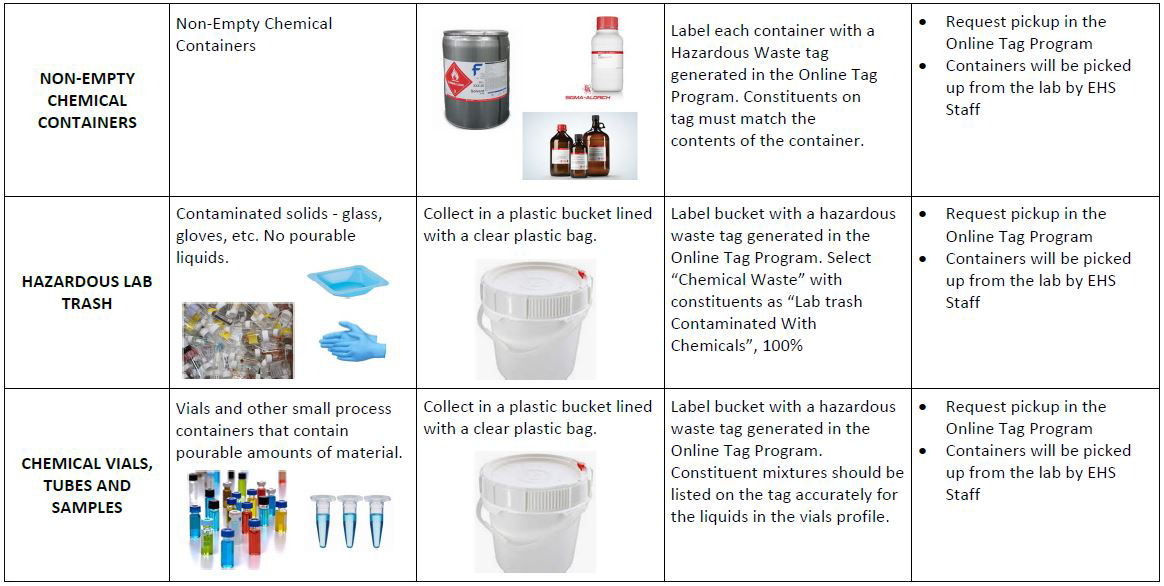
If the container does NOT qualify as empty and cannot be emptied into a compatible hazardous waste receptacle, then the container and its contents must be collected by Environment, Health & Safety (EH&S) for disposal as hazardous waste by one of the methods listed below:
3. Dispose of empty containers according to requirement.
After determining your hazardous material container is an "empty" container according to the criteria above, dispose of it according to its size, following the procedures below:
|
|
ITEMS |
CONTAINER |
LABELING |
DISPOSAL |
|
EMPTY GLASS & PLASTIC WASTE |
Clean/Empty:
|
|
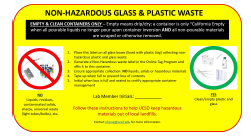 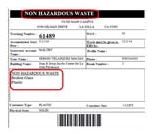 |
When boxes are 75% full, close the lid and seal the top of the box with packaging tape. (Note: The box should not weigh more than 50 pounds.)
|
|
EMPTY PLASTICS |
Clean/Empty:
|
Cardboard box lined with a plastic bag. Size so that total weight when full does not exceed 30 lbs. |
|
|
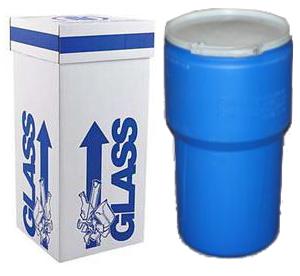
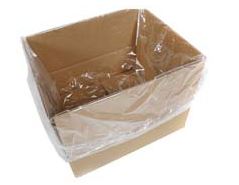
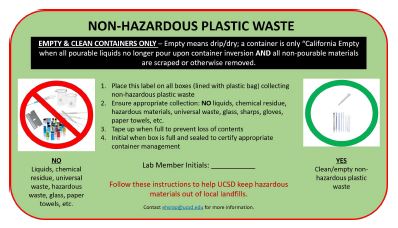
Due to concerns regarding punctures or cuts to campus personnel handling trash containers, all glass containers, broken glass, and pointed plastic must be disposed of in cardboard containers.
Boxes or drums must be lined with clear heavy (>= 2mil thickness) plastic bags. Do not use red bags for the lining.
Cross out labels and remove caps of empty chemical containers before discarding.
- Review the Lab Container Disposal Flowchart for more information
Contents from the Empty Glass and Plastic waste stream (yellow label) are destined for the landfill so it is critical that only appropriate materials are placed inside. Due to past issues with this waste stream, these boxes are currently being reviewed for compliance and to divert recyclable materials.
4. Prohibited Items for Glass Disposal Boxes
- Thermometers
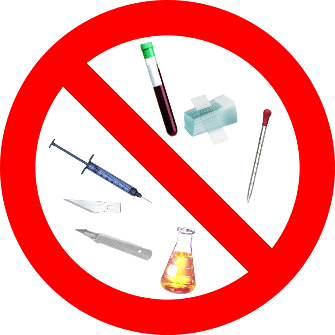
- Any containers with liquids or residue (i.e., contaminated with chemical, biological or radioactive material)
- Syringes
- Any type of listed sharps (needles, razor blades, scalpels, etc)
- Light bulbs, batteries and other universal waste items
5. Management of Empty Chemical Containers Greater than 5 Gallons
- Empty chemical containers greater than 5 gallons must be labeled with the word “Empty” and the date at which the container was emptied.
- Empty containers must be either disposed of through the Online Tag Program and Campus EH&S or picked up by the contractor within 1 year.